
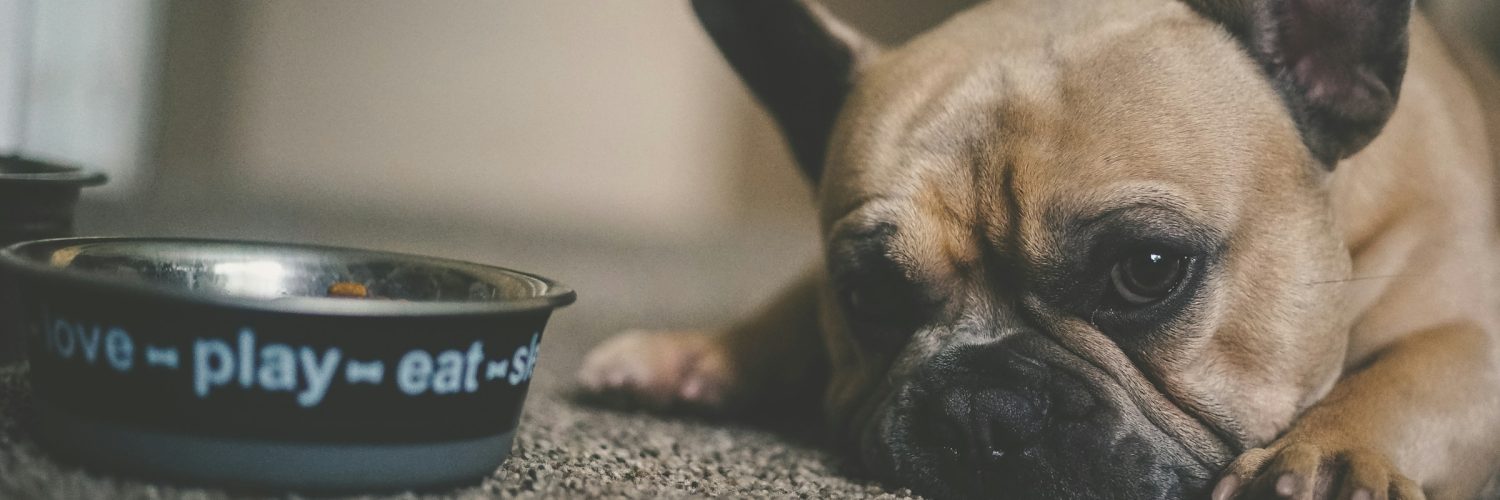
It’s a worrisome moment for any pet owner: your usually enthusiastic dog not eating their dinner, or your finicky cat turning up their nose at their favorite treats. “Why won’t my dog eat?” or “My cat won’t eat—what’s wrong?” are questions we hear all the time at Gardens Animal Hospital, and the truth is, a sudden loss of appetite can be caused by many different things—some minor, some more serious.
Why Pets Stop Eating
Pets, like people, can lose their appetite for a variety of reasons:
- Minor illnesses or discomfort: Upset stomach, mild infection, or even teething in younger pets can make eating unappealing.
- Dental problems: Painful teeth or gums can make chewing difficult.
- Stress or environmental changes: Moving homes, a new pet in the house, or changes in routine can affect a pet’s appetite.
- More serious health issues: Kidney disease, liver problems, infections, or other systemic illnesses can also reduce appetite.
Signs to Watch For
A pet refusing food is concerning, but it’s especially urgent if accompanied by:
- Vomiting or diarrhea
- Lethargy or unusual tiredness
- Drooling or pawing at the mouth
- Weight loss or sudden changes in drinking habits
What You Can Do at Home
For minor cases, there are a few things you can try to encourage your pet to eat:
- Offer favorite foods: Warm up wet food or add a little low-sodium broth to make meals more enticing.
- Smaller, frequent meals: Sometimes, pets are more willing to eat small portions throughout the day.
- Reduce stress: Make mealtime calm and quiet. Avoid forcing your pet to eat.
However, if your dog hasn’t eaten for more than 24–48 hours, or your cat for more than 12–24 hours, it’s time to call your veterinarian. Cats in particular can develop serious liver issues if they stop eating.
Why Gardens Animal Hospital Can Help
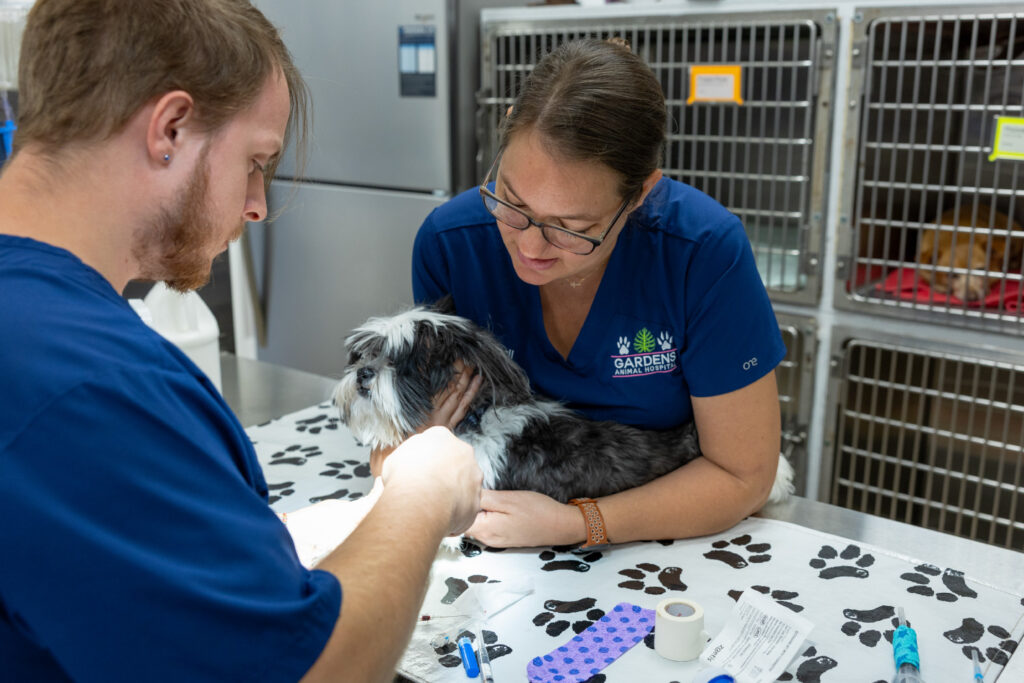
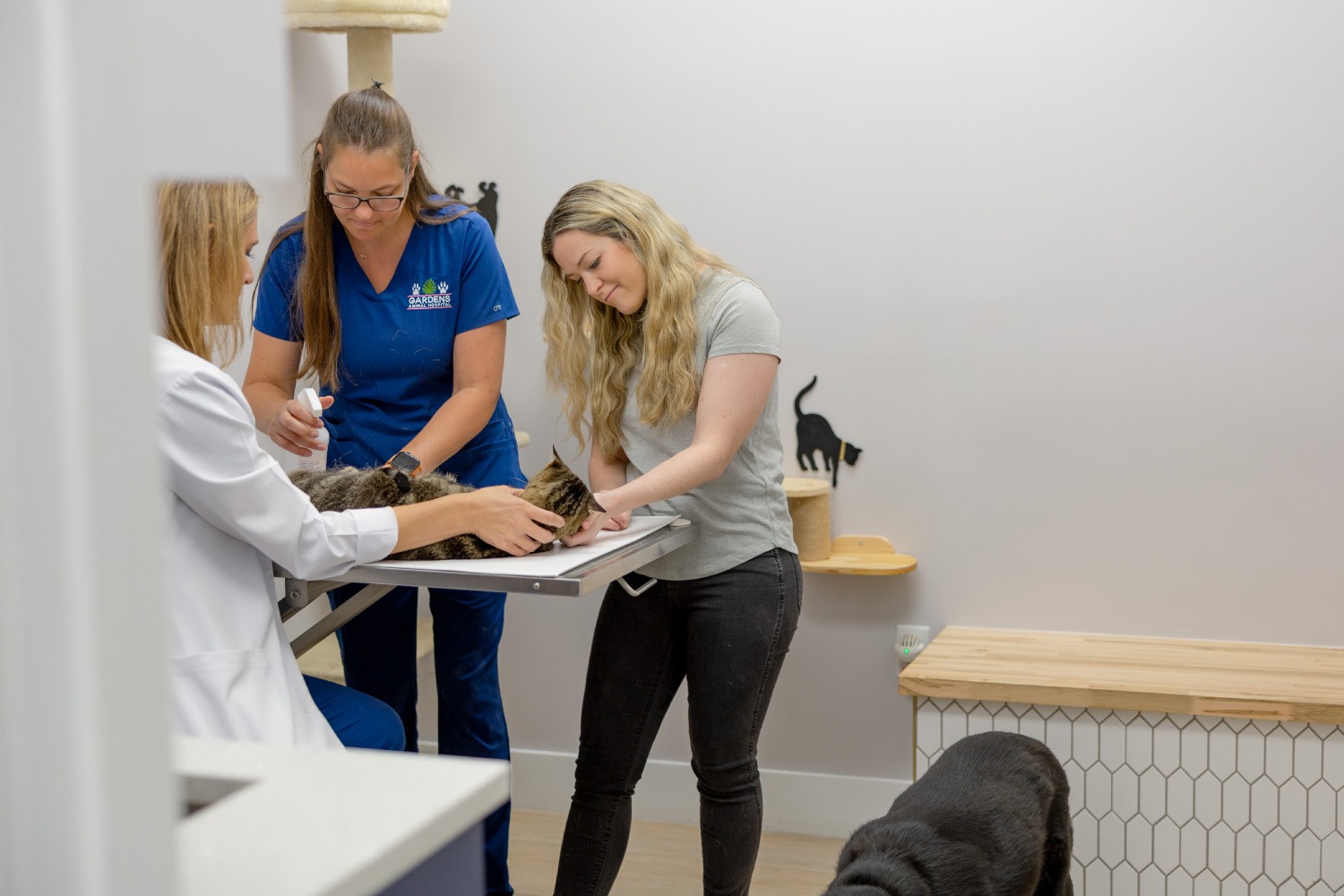
At Gardens Animal Hospital, we’ve cared for countless dogs and cats with appetite issues. Our team combines years of veterinary expertise with genuine compassion, helping you identify the underlying cause of your pet’s appetite loss. Whether it’s a routine check-up, diagnostic testing, or treatment for an illness, we guide you through every step—because your pet’s health and happiness are our top priority.
Bottom Line
A pet that won’t eat isn’t just inconvenient—it’s a sign that something may be off. Keep an eye on behavior, look for warning signs, and don’t hesitate to contact your vet. Early intervention can make all the difference.
If your dog or cat won’t eat, call Gardens Animal Hospital today and let us help your furry friend feel like themselves again.