

Bringing home a new puppy or kitten is exciting—but it also comes with responsibility. One of your first and most important steps is scheduling your pet’s first veterinary appointment. Knowing what to expect at your puppy or kitten’s first vet visit helps you feel confident, prepared, and ready to give your pet a healthy start.
Let’s walk through exactly what happens, why it matters, and how you can make the visit smooth and stress-free.
Why Is the First Vet Visit So Important?
Your pet’s first visit sets the foundation for lifelong health. During this appointment, your veterinarian evaluates your pet’s overall condition and identifies any early concerns.
What’s happening behind the scenes?
Veterinarians look for:
- Congenital issues (present at birth)
- Early signs of illness
- Parasites like fleas, ticks, or worms
- Proper growth and development
According to the American Veterinary Medical Association (AVMA), early veterinary care significantly improves long-term health outcomes and helps prevent serious diseases.
Real-world example:
A seemingly healthy kitten may carry intestinal parasites without obvious symptoms. Early detection during the first visit allows for quick treatment—before it becomes a bigger issue.
What Should You Bring to the Appointment?
Preparation makes the visit faster and more productive.
Bring these essentials:
- Previous medical records (if available)
- Adoption or breeder paperwork
- A stool sample (if requested)
- A list of questions or concerns
- Your pet in a secure carrier or on a leash
Pro tip:
Write down anything unusual you’ve noticed—like appetite changes or behavior quirks. Small details often help your vet spot early issues.
What Happens During the Physical Exam?
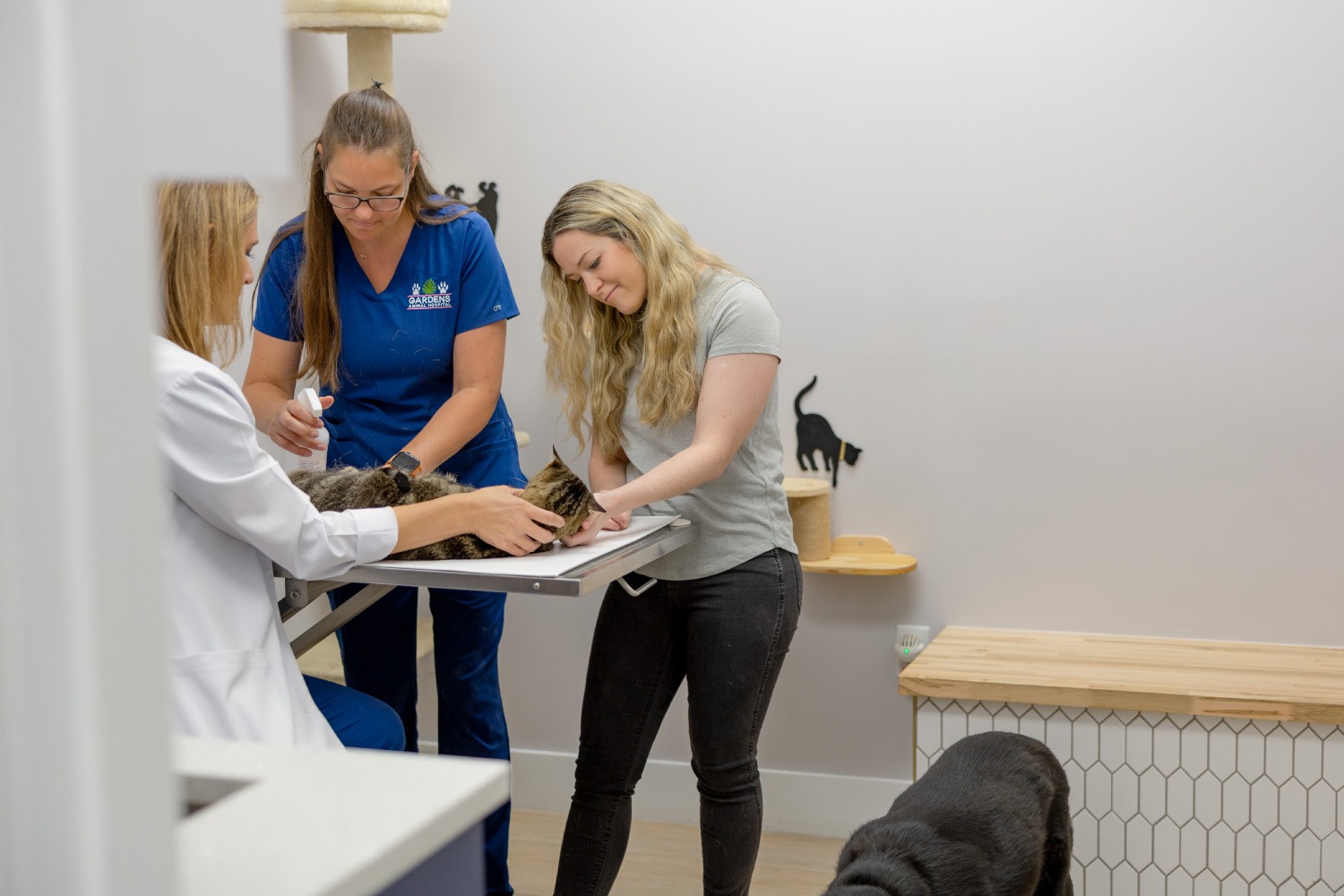
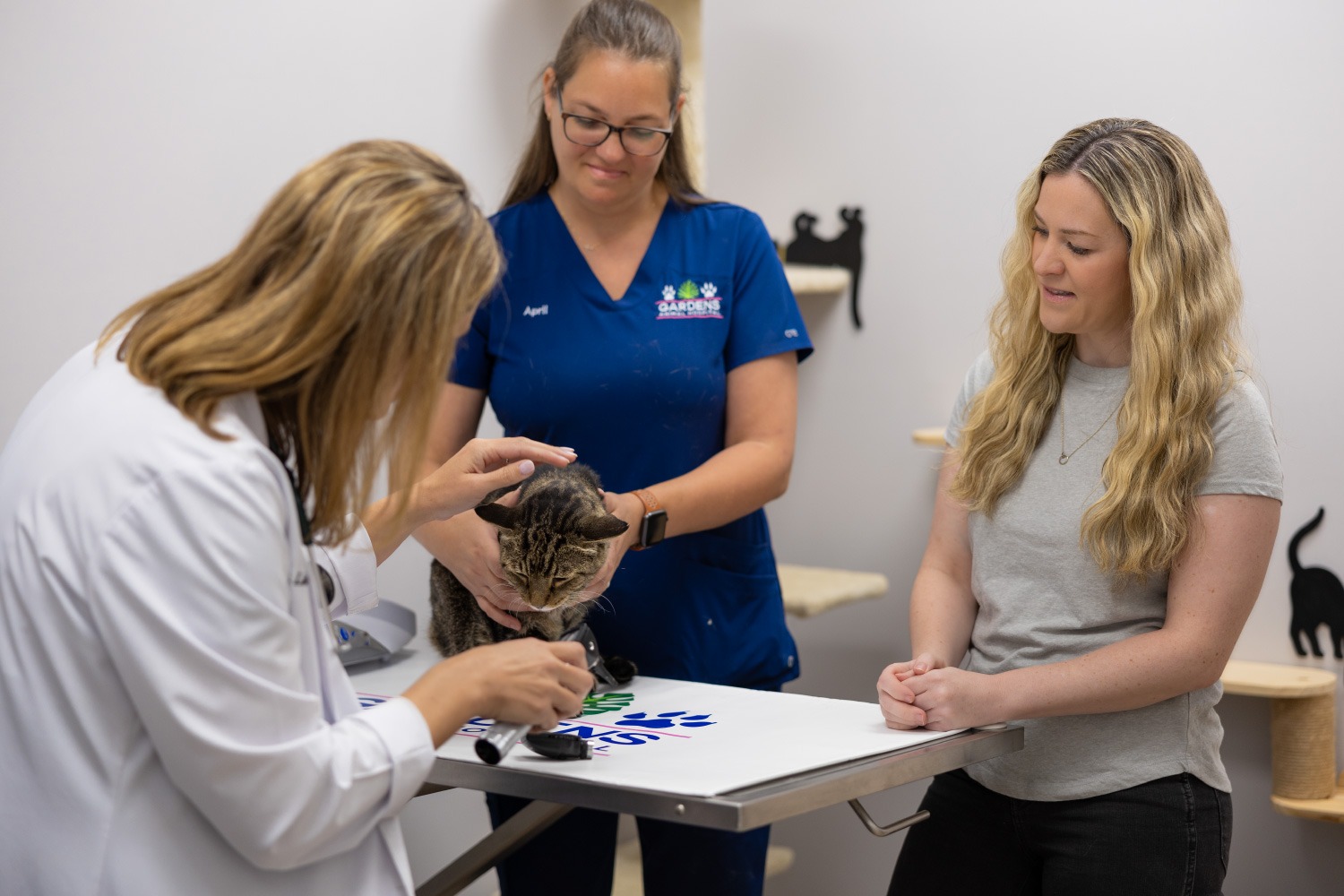
Your veterinarian will perform a full nose-to-tail exam to assess your pet’s health.
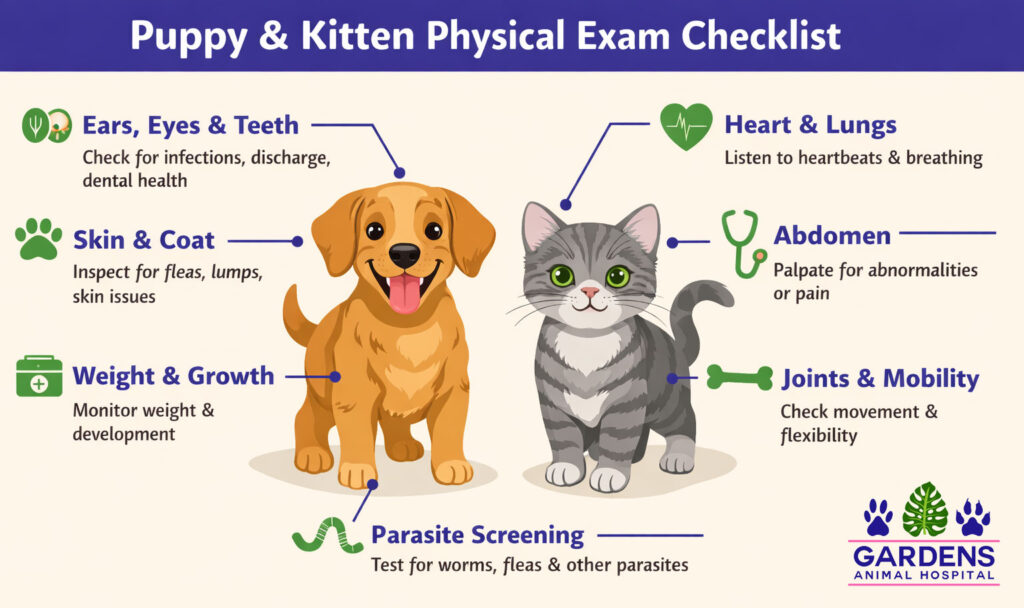
What does the vet check for?
- Eyes, ears, and teeth condition
- Heart and lung sounds
- Skin and coat health
- Weight and body condition
- Joint movement and mobility
- Abdomen for abnormalities
Why this matters:
Even subtle abnormalities—like a heart murmur or mild skin irritation—can be caught early and monitored or treated.
Example:
A puppy with slightly inflamed gums may be showing early teething discomfort, which your vet can help you manage safely.
What Vaccines Will My Puppy or Kitten Need?
Vaccinations protect your pet from serious, often life-threatening diseases.
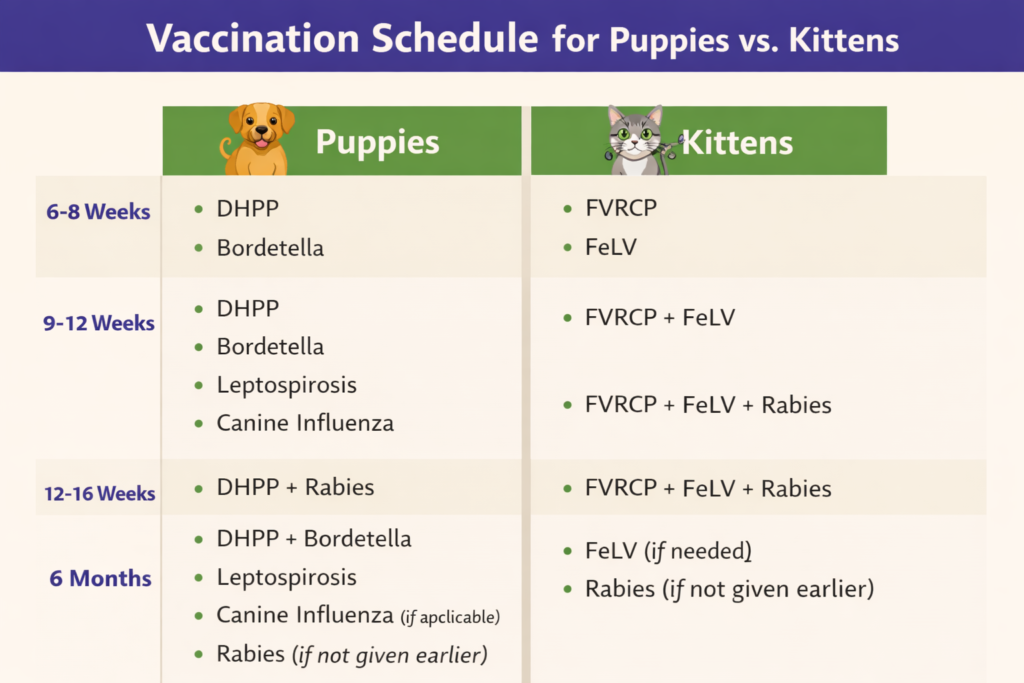
Core puppy vaccines typically include:
- Distemper
- Parvovirus
- Adenovirus
- Rabies
Core kitten vaccines typically include:
- Feline distemper (panleukopenia)
- Feline herpesvirus
- Calicivirus
- Rabies
Timing matters:
Vaccines are given in a series over several weeks to build strong immunity.
Example:
Your puppy may receive their first round at 6–8 weeks, followed by boosters every 3–4 weeks until about 16 weeks of age.
Will My Pet Be Tested for Parasites?
Yes—parasite screening is a standard part of the first visit.
Common parasites include:
- Roundworms
- Hookworms
- Fleas
- Ticks
- Ear mites
Why early testing matters:
Many young pets are born with or exposed to parasites early in life.
Real-world example:
A kitten with a bloated belly might have roundworms, even if they’re active and eating normally.
Your vet will recommend:
- Deworming treatments
- Flea and tick prevention
- Heartworm prevention (especially important in Florida)
What Questions Will the Vet Ask You?
Expect your veterinarian to gather background information about your pet’s lifestyle and habits.
Common questions include:
- What is your pet eating?
- How often do they eat?
- Any vomiting or diarrhea?
- Energy levels and behavior?
- Living environment (indoors/outdoors)?
Why this matters:
Your answers help tailor recommendations for nutrition, prevention, and care.
How Can You Prepare Your Pet for a Stress-Free Visit?
Vet visits can feel overwhelming for young pets—but a little preparation goes a long way.
Tips for a smoother experience:
- Use a comfortable carrier or leash
- Bring treats or a favorite toy
- Handle your pet gently at home beforehand
- Keep the experience calm and positive
Example:
Let your kitten explore their carrier at home before the visit. This reduces anxiety and makes transport easier.
When Should You Call the Vet After the First Visit?
Even after a successful first appointment, you should stay alert.
Contact your vet if you notice:
- Loss of appetite
- Vomiting or diarrhea
- Lethargy
- Coughing or sneezing
- Signs of pain or discomfort
Why this matters:
Young pets can decline quickly, so early intervention is critical.
Setting Your Pet Up for a Healthy Life
Your puppy or kitten’s first vet visit is more than just a checkup—it’s the beginning of a lifelong health journey. By understanding what to expect and preparing ahead of time, you help your pet feel safe while ensuring they get the best possible start.
FAQ Section
1. When should I take my puppy or kitten to the vet for the first time?
Ideally, within the first week of bringing them home or around 6–8 weeks of age.
2. How much does a first vet visit cost?
For our current service pricing, please contact Gardens Animal Hospital.
3. Do I need to bring a stool sample?
Yes, if possible. It helps your vet check for intestinal parasites.
4. How long does the first vet visit take?
Typically 30–60 minutes, depending on exams, vaccines, and questions.
5. Can I feed my pet before the appointment?
Yes, unless your vet advises otherwise. Bring treats to keep them comfortable.
6. What if my pet seems healthy—do I still need a visit?
Absolutely. Many health issues aren’t visible without a professional exam.
Why Choose Gardens Animal Hospital
At Gardens Animal Hospital, our veterinary team understands that your puppy or kitten’s first visit is a big milestone. We take time to perform thorough exams, answer your questions, and create a personalized care plan tailored to your pet’s needs.
With years of experience in preventive care, vaccinations, and early disease detection, our team focuses on building trust—both with you and your pet. We use gentle handling techniques and clear communication to ensure every visit feels comfortable and informative.
Our goal is simple: help your new companion grow into a healthy, happy member of your family.

Sources
American Veterinary Medical Association – First Pet Visit (https://www.avma.org/resources-tools/pet-owners/petcare/your-first-pet-visit)
American Animal Hospital Association – Vaccination Guidelines (https://www.aaha.org/aaha-guidelines/vaccination-canine-configuration/)
Cornell University College of Veterinary Medicine – Kitten Care (https://www.vet.cornell.edu/departments-centers-and-institutes/cornell-feline-health-center/health-information/kitten-care)